Martin Willoughby: Building the Future, Respecting the Past
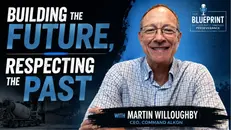


In this episode of The Blueprint, we sit down with Martin Willoughby, CEO of Command Alkon, to explore his unconventional journey from law, technology and cybersecurity into the concrete industry. Martin shares his perspective on leading a 50-year-old company, balancing the lessons of the past with the need to embrace change, and where technology and AI are taking the concrete industry next. We also dig into leadership, innovation, the challenges facing today’s industry, and what the next decade could look like for concrete and the people who build it.
Music licensed from PremiumBeat
Track: Orange Sunset – One Wave
Code: LFXMSDZY7M2GOM5O
Joel: Hi everyone, welcome to the Blueprint. I'm Joel Galloway. Today, our guest is Martin Willoughby, CEO of Command Alcon, a technology company serving the heavy building materials industry. With a background in law, technology, and cybersecurity, Martin took an unconventional path into the concrete industry before becoming CEO in 2021. As Command Alcon celebrates 50 years, Martin is helping lead the company into its next chapter. technology, innovation, and AI. Today we'll talk about his journey, leadership, and his vision for the future of our industry. All right, Martin. Thank you so much for joining us. We're so glad to have you here. How have you been? You doing okay today?
Martin Willoughby: Wonderful. Good to see you guys today. Good to be with you.
Joel: Great to have you. Yes. So
T.J. Crosby: Glad to have you. Appreciate it.
Joel: welcome to the blueprint, obviously. you have had a very, very interesting path that is different than a lot of people when it comes to how you got to to this point in your career. Start off with just telling us a little bit about that and about how how you got to today.
Martin Willoughby: Wow. Okay. That's a good open ended question that we'll start with there to I'll I'll give you the conde you know it it at fifty seven, that's been a kind of a long and windy road. So I'll I'll give you the the condensed version of that really more recent.
Joel: Okay.
Martin Willoughby: Let me tell you more thematically in my life, and I think this will make sense. And so let me just give you a couple of headliners. So I I grew up in an entrepreneurial family. My I my dad was an entrepreneur. So I kind of grew up with that entrepreneurial bug. I I spent my 20s as an entrepreneur. I managed public and private tennis facilities. Very interesting. During that time I went back to law school and ended up having a wonderful law career that was really centered around business law and business consulting and my that took some different forms working at different firms, ultimately having my own firm as an entrepreneur, that made a lot of sense. And so I had the pleasure of working with lots of scaling entrepreneurs in all kinds of different industries. And so really enjoyed the consulting aspect of that a lot, enjoyed helping people build teams and cultures to to really grow and scale. And so that led me to joined Butler Snow advisory where I was able to focus on that full time and not the law. and through all that I had a wonderful I had worked with technology companies for years and I had a wonderful client, friends who had a company called BombGuard, which is now beyond trust. And it's really key to my journey and story because over a 15 year period I went from an outside advisor To on the executive team. and it was really through all that that I ended up at Command Elcon because in 2020 I was called by one of the private equity owners who had owned Bomgar and said, Hey, we'd like you to come to Command Elcon. We'd like for you to be the CEO here and be a successor for Phil Ramsey, and that's how I ended up in the concrete industry with you guys.
Joel: Wow. Okay. Well, how what did
T.J. Crosby: You
Joel: you know about concrete before then based on that? Would you have any connection, any knowledge about it?
Martin Willoughby: you know, not a lot, you know. I I had been around construction projects and things of that nature, but I certainly was very limited in my knowledge. And I will even tell you, I think as a kid, I remember seeing the the you know the mixer trucks down the road and had a ready mix on the side. And I I thought that was just the name of the company. I didn't know that was ready mix was a thing. And so it was so It's it it's been wonderful though to to come into this industry and I had very helpful colleagues that took me to customer sites and educated me a lot. It was fun.
T.J. Crosby: good.
Joel: What do you think's the biggest thing that surprised you then that about about the industry now that you're on the inside?
Martin Willoughby: You know, what was interesting to me, I mean so many things, right? But one that stands out in particular to but two elements to me. One was the perishability aspect. I just had no idea
Joel: Mm-hmm.
Martin Willoughby: what a clock every time I saw one of those trucks, what a clock they were on. and
Joel: Yes.
T.J. Crosby: Mm-hmm.
Martin Willoughby: then number two is the the complexity of the mix designs and how many different recipes, if you will, go into making concrete and just the wide variation and specs that can be around that. I had no idea the complexity that can go into.
T.J. Crosby: It's interesting. mean, because I'm with you, because I came from the outside. was so I was working in private equity and then came out to kind of pursue concrete careers and invest in that. But when I got into the concrete space, I did not understand how complex concrete really is in the technical side of it.
Martin Willoughby: And it's you know, and I would say I knew there was a lot of concrete, but I didn't realize how widespread its use is in
T.J. Crosby: Mm-hmm.
Martin Willoughby: our society. I came to deeply appreciate what an integral role we play in the built world around us. And so it I I'm I'm I certainly see the world through a different lens now that I'm on this side of it. So this is
T.J. Crosby: Yeah.
Joel: Absolutely.
Martin Willoughby: fun.
T.J. Crosby: Once you become concrete aware, you see it all over the place. Like at one point
Martin Willoughby: You see it everywhere.
T.J. Crosby: I had a, we had a client that, they make, you know, they make light poles out of concrete. I'm like, man, it's
Martin Willoughby: What?
T.J. Crosby: not even, you know, it's just like, what? Yeah. It's crazy.
Martin Willoughby: All the different uses and you know, just my head's on a swivel as I'm driving down the road 'cause I'm just observing
T.J. Crosby: Right.
Martin Willoughby: all the different uses that are out.
T.J. Crosby: Right. That's crazy. So, mean, you know, having had the experience that you had, you when you were asked to go to command, obviously you could have remained in what you were doing or choose to go to command, right? And obviously you've been there for a while now. You've really kind of grown to love the organization. What do you think made you most attracted to the opportunity that it
Martin Willoughby: Yeah.
T.J. Crosby: presented?
Martin Willoughby: You know, it was it was interesting. Sue I you know, I shared my brief snippet of background and and mentioned to you that I had touched lots of different industries. one quick side note I would tell you is I had a stint where I was running an ambulance company, which actually has a lot of similarities to this industry
T.J. Crosby: Yeah.
Martin Willoughby: because it the dispatching, the importance of the delivery professionals or the ambulance drivers, the customer, all that. So What was interesting coming from cybersecurity, which is, you know, kind of out there in the internet, you know, ether and cyber, you know, it's digits and coming to a world, what was interesting to me is coming to a very physical real world technology company where, you know, you have the physical world meeting the technological world interacting with people. I thought that was going to be really interesting to do. So I was excited. to be back in an industry very much like that. And then two, I felt like that command as a as a market leader, there was an opportunity to have a real impact and sh you know, you want to feel like your work matters, right? We all want to show up and
Joel: Thank you.
Martin Willoughby: feel like what I do every day has purpose and meaning and is bringing value to the world. And I thought, you know,
Joel: Yes.
Martin Willoughby: we're gonna go through a transformation and do some things. And if they're the market leader, what an opportunity to have a positive impact. So you know, those are the practical things I thought about coming over here. And because I was familiar with the ownership I knew and trusted them that hey this will this will be a place and they knew me and felt like this would be a place that I could have a positive
T.J. Crosby: Yeah, that's awesome. That's awesome. It's good to hear it kind of the multi multi-factor. Yeah. think a lot of people, tons of people, think about the folks who've made it to higher levels of leadership and it's like, they, they, they, they aspire to be kind of in charge or whatever. A lot of times that's not, it's like, no, there's, there's the opportunity to make an impact is really, really more of the focus.
Joel: I I always heard it said the people who want to be in charge don't probably need to be in charge.
Martin Willoughby: I
T.J. Crosby: HAHAHA
Martin Willoughby: think that's a a fair I think that's the
T.J. Crosby: Right.
Martin Willoughby: rule of thumb, you might say, you know.
T.J. Crosby: It's got like the politicians, people that want to become the certain political roles, like they're very ambitious. Often times they're like, hey, what about the guy in the back of the room that's real quiet and is here every week? Let's get him to be the city councilman.
Martin Willoughby: Well I always look at it is it's it's like if you're misinformed what really leadership is because to me, you know, leadership in in where you are in that is really about how many people you serve, right? Not
T.J. Crosby: Mm-hmm.
Martin Willoughby: how many people are serving you. And so, you know, it you know, whatever level you go, that's just more people that you're serving. And I don't know that everybody fully thinks through that before they they get there.
Joel: No, they
T.J. Crosby: Yeah.
Joel: don't. They really don't.
T.J. Crosby: Well, mean, honestly, honestly, there's like an aspect of being a business leader and a business owner on my side, like just even the, and same thing for you leading the company is like that obligation to make sure that you're reliably make sure the company's operating in a way that can handle payroll on a regular basis and can generate revenue that it needs to, to provide the livelihoods. It's important. That's an important role.
Martin Willoughby: Like responsibilities.
T.J. Crosby: so I'm a big fan of people who come in to different industries from outside of the industry, I will say. I just, over my career, I've seen a lot of people have successful careers moving from one industry to another. The norm is normally that people grow up in an industry and people don't move from the outside. So it's cool to know that you've kind of been one of those nomads who's gone from one to another, which is great. In that, there's oftentimes ideas or things that could be seen by somebody who comes from the outside. Obviously there's a lot to learn, but there's also ideas you bring from the outside that maybe people don't have that are in the industry. What do you feel like you might've noticed in helping to enhance the industry that you feel like maybe others wouldn't have seen, who would kind of had grown up in the industry, do you feel?
Martin Willoughby: You know, I think about that, TJ, in kind of two ways, right? And and I appreciate I appreciate you sharing Mingo about kind of your own entree into this this concrete world. I think about it through the lens of command internally in and the industry at large, if you will, right? And so th to kind of reiterate your point, I do I do onboarding sessions for all new employees that join Command Alcon and One of the things that I really emphasize is that everybody is bringing unique skills, backgrounds, experiences to Command Alcon. And
T.J. Crosby: Mm-hmm.
Martin Willoughby: that, you know, I think the longer you are somewhere, the harder it is to see with fresh eyes. And so my appeal to them is to please view command with your fresh eyes. And pass on. Like you know, you hear it from me, like we don't have it all figured out. We're learning, we're growing, we're trying to get better every day. So if you're getting an attitude of like this is our way and everything else is terrible, that is not reflective of my view, right? We're trying to learn again.
T.J. Crosby: Right, right.
Martin Willoughby: So my point there is that I I think I look at that through the lens of command in the industry. And you know, I don't know that I was seeing anything necessarily compared. completely unique versus what you know your average concrete professional might have. But I would tell you things that I noticed and appreciated as an outsider, right? And
T.J. Crosby: Mm-hmm.
Martin Willoughby: coming into it is certainly the the role of relationships in this business and how important that is. the way we actually I don't want to take a short question and turn it into a long answer, but I'll I'll be brief here. Is the we one of the things I wanted to do when we got here is I wanted to kind of redefine our mission, vision, and values and where we're going as a company. And it was very important to me, based on all the conversations I had had, guys, in the industry, that integrity
T.J. Crosby: Mm-hmm.
Martin Willoughby: was part of this. And the reason I said it was I said, guys, I've been in a lot of industries. I've I've spent a lot of time now out in the field talking to people in this industry. And this is a, you know, say what you're going to do and then do what you say industry. I'll call that a handshake industry. And so
T.J. Crosby: Mm-hmm.
Martin Willoughby: the importance to me of integrity, the importance of the relationships that exist with this industry were certainly things that I took note of coming into it. And and I will tell you too, because I had researched it coming in that. On the the like digital transformation, where are you in the journey? The construction industry, so that's broader than just heavy building materials and concrete, was one notch above hunting in terms of its digital transformation, like it was just above the last one there. And I thought, but what's interesting
Joel: Yeah.
T.J. Crosby: Mm-hmm.
Martin Willoughby: is when I got here, I found that I found that actually varied a lot. I found that people were across the spectrum. Certainly some people were. get that technology out of here and others were help me go further faster down that journey. So those were just some some observations I had, TJ, kind of coming in about this industry that we all serve together.
T.J. Crosby: Yeah, that's an interesting point you made. I've heard somebody mentioned at one point, I didn't fact check them. So I don't know if this was actually true, but they said that farming had gotten ahead of our space and technology, technological adoption. but
Martin Willoughby: I think it was
T.J. Crosby: you know, I think about that some of the automated like tractors and the GPS,
Martin Willoughby: I don't know, right?
T.J. Crosby: I mean,
Joel: Yes.
T.J. Crosby: I'm not surprised, but you know, we have a lot of opportunity, but I'm with you. think the people that I see that are that are embracing the technology and are using it as tools to equip their teams are starting to outpace those that don't. And it's just a natural thing that happens that, you know, at some point people were using a handsaw, right? And then they started using a power saw and then they started using a miter saw and then a compound miter saw. then, you know, so it's like you...
Joel: Now they're using a satellite to plow their field. Like it's it's just it's the
T.J. Crosby: You're like...
Joel: circle of life, gentlemen. Like it's
T.J. Crosby: You know, now you've got a machine that goes out there and grabs a hold of the tree and cuts it into pieces. I mean, it's all kind of stuff going on with state of the saw analogy, yeah.
Martin Willoughby: Well let me float this to you guys, right? So this is my observation and you can tell me if you agree or not. So so six years, almost six years in now, I I've I've noticed a distinct shift and and I it's hard for me to pinpoint when, maybe two, two and half years ago, I started seeing much broader embracing of change
T.J. Crosby: Mm-hmm.
Martin Willoughby: and technology into this industry. And My own kind of thesis on this is that again, this is anecdotal, not you know, I don't have the hard data behind this, but it's I've I've seen a lot of generational change in the industry. I've seen both at the ownership level as well as leadership positions in throughout. So I'm seeing generational shifts and so the expectations of technology are sort of different. and and I'm also seeing I think the Most of the tech providers now serving this industry are all you know very forward thinking in what they're doing. And then also I think the the promise of AI, and I'm sure we'll talk a little bit about AI, but I think the promise of AI has people kind of thinking and imagining what could be as we go forward. So I think all of that to me, so I don't worry or think about, you know, we're not an industry that's going to embrace. technology and change. I think it's an inevitability at this point. It's really just the pace of change that will will
T.J. Crosby: Agreed.
Martin Willoughby: take that.
T.J. Crosby: Agreed. yeah, it's, it's interesting. joined, like I said, just over three years ago and I, in my time here at the different associations, I've been a part of seeing these like principles that are retiring after 40 years, whatever. like, I feel like I've joined the industry at a unique time when there's just so much regime change happening.
Joel: A huge point of transition generation.
T.J. Crosby: honestly, People talk about millennials, but millennials are in their mid forties and younger at this point, right? They still think they're like college kids from bounce.
Joel: Yeah, it's not us. It's it's the next one.
T.J. Crosby: Yeah, right. But they're, but I mean, they're largely technology natives. They've grown up. They went through that transition at a very young age with technology, the home computer and all that kind of stuff. So now it's just, just so part of their existence as they start to step into these leadership positions. I think I'm seeing more and more of that. appetite and then especially the generations to follow. We were talking with Ron a few months ago about you
Joel: Yes.
T.J. Crosby: certainly don't want to have people feel like their technology they have at home is more advanced than what they have from the
Martin Willoughby: Exactly.
T.J. Crosby: corporation they work for. That feels out of balance if that's the case, right?
Martin Willoughby: think those are all the drivers, right? And I'm I'm sure in the the searches and the careers that y'all are helping people do, you're you're starting to see some of that generational shift take place. So
T.J. Crosby: Yeah, for sure. So, you you, you stepped into the CEO role, but you said about six, six years ago, right? Almost six years ago. And you mentioned already kind of serving the people that are part of the company. What did stepping into the CEO's spot teach you about leadership? you feel?
Martin Willoughby: You know, every it it sounds like TJ you've worked, you know, in some different areas and things and Joe, I know from talking to you you've done some different things. I think every every new situation brings its own leadership opportunities to a moment. And
Joel: Yes.
Martin Willoughby: and I'll tell you that when when I stepped into command, what I thought about and and I would say the biggest, you know, maybe lesson or thing that I kind of thought through was that It became very apparent to me in listening. I always think whenever you're in a new role, you need to be a listener much more than a talker. And so I did a lot of listening and trying to understand. And then once it was very clear to me the best way to serve this industry going forward, then you know, I wanted to get there as fast as we could. Right. And so y but to me as a leader, you have to move at a pace to try It's all about change, right? And we we all know that there's a certain resistance to change that we all have, you know, subconsciously. And so, you know, to me, the the key leadership elements for me here were to share the clarity that I had received from talking to so many people. So I I used to bring customers in to visit at our all hands meeting. We do a monthly all hands meeting. And so I would say I'm having all these great conversations. I want all of you guys to hear what what I'm hearing. So clarity, like why are we doing what we're doing? What is the strategy that we're doing? And so because you have to have the why, right? If you're going to go through change, you have to have the why. So I would say to me, what I had to really rely on was the the role of a leader of creating clarity, you know, repeating that clarity a lot, and then being patient enough to drive forward, but you you don't want to break things either. You know what I mean? Like it's like
T.J. Crosby: Right. Right.
Martin Willoughby: you want so it but when you're anxious to serve, you want to you want to help the customers, you want to push, push, push, but you also have to be mindful that you know you have to get a whole organization. And so just striking that proper balance of driving innovation and transformation. at the same time making sure that you're bringing everybody with you on that journey together. And so that that was to me
T.J. Crosby: Mm-hmm. Right. Right.
Martin Willoughby: the real focus, particularly in the early days at command.
Joel: Push but don't break it.
T.J. Crosby: Yeah, I can imagine that's a great, we'll say what that Joel, sorry.
Joel: Said push but don't break it.
Martin Willoughby: Put they don't break. Yes.
T.J. Crosby: Right. Right. Well, I mean, I can imagine there's going to be a natural friction, especially in the technology realm. When you pull in people that come from other technology companies, because there's a, I want to get your perspective on it, but there's a bit of a Tennessee in the tech space, especially it's very startup centric, right? You don't, when you're a startup, you haven't had to prove a lot yet. Right. Like you, you can fail fast and fail forward. You know, and there's this, it tends to be this change for changes sake. Let's just try it and see what happens. Right. But when you're at the helm of a company that's been serving industry like this for nearly five decades at the time, now five decades now, how, do you, how have you balanced that kind of onboarding of technology talent against that? We've got to still respect what has been built and make sure we don't break it.
Martin Willoughby: Well, it's a it's a great question, TJ. And I think there's several elements to me that are are critical on this. You know one is you you you hit on something though that I I want to kind of emphasize. The again is what this was a leadership strategy. What I try to do is combine people with decades of heavy building materials experience, right? With people who had had deep technology experience in other sectors, right? So To blend that together in a way where they honored and respected each other and respected the talents that each person brought to the equation to kind of do that, right? So you you hit on one key element of the leadership strategy here at Commando Con. Number two is to honor, I was thinking with our 50-year-old thought about this a lot, is that most technology companies fail, right? They just they're not around. I mean, fifty years is unbelievable for
Joel: Yeah.
Martin Willoughby: a a technology company. And so, you know, I I I tell people it's like dog ears or something, you know, 'cause and as y'all know, we we we serve people who have been around for a hundred plus years in this industry. Incredible, you know. And I say, But look, hey, you gotta give a little credit to fifty years in technology. Like that is really and so but my point is I I don't take it for granted that we stand on the shoulders of the people that built this before. And so I think you
T.J. Crosby: Mm-hmm. Mm-hmm.
Martin Willoughby: We have to continue to show honor and respect of how hard that is to build it and to be sustainable. And the third thing I think that you said in there, TJ, that's super important to me is w we can you know, we want to be innovative like a startup, but we can't you also have to recognize that we're we are mission critical for our customers. And you
T.J. Crosby: Right.
Martin Willoughby: know, the way I describe it is, I mean, it's like You know, when I woke up this morning and turned on my computer, I expected the lights to come on, I expected the computer to pop up, I expected the internet to work, and you know, if my lights weren't working, that's a big problem, you know, and the power wasn't on
T.J. Crosby: Right.
Martin Willoughby: and we couldn't do this interview. So what I share with people
T.J. Crosby: Right. Right.
Martin Willoughby: is I you know, I try to remind us all the time that, you know, we are mission critical for our customers. And so when we build, when we do things, yes, we want to be innovative. But we also wanna recognize that and make sure. So I hope what I'm describing there, TJ, to answer your question is is living in that tension
T.J. Crosby: Right?
Martin Willoughby: across all of that. But that's that's the job of us as leaders, right?
T.J. Crosby: Yeah. And I love the blended, the focus around blended leadership and blended experience. It's one thing that, you know, I promised to those listening, like we didn't like plan ahead to like make sure we're really aligned on this philosophy. But with clients of ours that we're talking about, building out a search, let's say they go out with three or four roles they need at one time. We try to encourage them, pull a couple in from the outside and a couple in from within. And you can get the new ideas, but also have that stability of people who know what works, who knows. why we do things a certain way within the industry. And I've just personally seen a lot of success. It's cool to hear a leader with your experience share the same kind of idea. It's like, okay, we're on the right track.
Martin Willoughby: I I think you're spot on, TJ. I mean, I think that's just gonna make your clients stronger in what they're doing
T.J. Crosby: Mm-hmm.
Martin Willoughby: in that regard. And and there's a lot of great crossover. I mean, the the gentleman that leads our hardware operations came over from A B B and he had tremendous experience bringing over hardware and so now he's helping us transform how we do hardware in concrete these days. So
T.J. Crosby: Yeah, that's cool. That's cool. So I'll move into a little bit more on the focus. Nobody would be shocked that I would ask you about technology and how it relates to the concrete industry more specifically. you know, in your mind, and I'll say let's leave AI to the side for just a minute, because we'll ask about AI. Everybody, everybody.
Joel: Yeah. It's coming. It's coming whether we like it or not in the interview and in life. So we you know.
T.J. Crosby: We will ask about AI because everybody wants to know about AI, but apart from AI, what's the biggest technology opportunity you see in concrete right now? What you say? Or a big one. It doesn't have to be the biggest. Sometimes people get jammed up. They try to think of what's the biggest, a big opportunity to see.
Martin Willoughby: Let let me let me say it to you this way, because I think l let me tell you where we are. We've already mentioned in this conversation about the generational change that's happening in our industry, right? You we're talking about people and all of that. And so my observation coming into this industry is we're also we're seeing this generational technology shift. So I mean, let's let's separate about, you know, AI and value transformation and all that. Let's take that out for a second. The fundamental shift that's happening right now is we're moving from a on-premise software world to a cloud-based software world. And so
Joel: Yeah.
Martin Willoughby: that that is the current moment that we're in across and if you look at command, and there's others too, but you know, command has had, you know, wonderful on-premise technology that has fueled the industry for the last 30, 40 years, right? And so,
T.J. Crosby: Mm-hmm.
Martin Willoughby: But making that change, this is where change management comes into this industry right now, is making that change to get to that AI future, to get to the value transformation, it's that shift. And so, you know, I I I would say you know, key thing in this industry right now is planning for those migrations. Because what it's an opportunity, and this is my big kind of encouragement, if you will, is to Think about your business processes in fresh. Remember what we were talking about earlier about when you're new to a company or industry or whatever, is I I I'm seeing the most innovative business owners, business leaders say, you know, I don't care how we've done it over the last thirty years. I mean, let's respect that, but let's look with fresh eyes on our own business processes. And so what I'm seeing as people are moving to the cloud, which is also gonna
T.J. Crosby: Mm-hmm.
Martin Willoughby: create in in This will set us up for our AI conversation, you know, garbage in, garbage out, right? So if you're not if you part of this is cleaning your data, part of this is thinking about your business process with fresh eyes. do y'all know the old expression? I I I think about this a lot in my own life is, you know, what got you here won't necessarily take you there, right?
Joel: Yeah.
Martin Willoughby: And so I think the old
T.J. Crosby: That's right. Yeah.
Martin Willoughby: Marshall Goldmith quote or something, but it's I think about that a lot is revisiting the processes, the way you've done business. And some of it you may just be revalidating, but some of it you may rethink as you go forward. So that's the moment I think that we're in that sets us up for the true transformation that's going to occur with AI. Does that make sense?
Joel: Yes.
T.J. Crosby: It does. mean, a hundred percent. That's one thing that as we talk to people about this idea, know, people who wonder sometimes why, why, why not? Why won't it get me where I'm going? And even sharing as small as our company is currently, you know, we've grown a lot in the last little bit and share with the team that, every, every sort of 50 % or 30 % or whatever level of growth, you'd literally add more people to do the work. so The two people sitting side by side, so to speak, can't just pass the piece of paper back and forth anymore. Right? Like you've got to have more of a process. so, but thank goodness, I think about kind of the, you know, some of the third world countries that are out there, they're sort of leapfrogging.
Martin Willoughby: Yes.
T.J. Crosby: So the infrastructure requirements we'd had once upon a time, because wifi allows things and there's wireless charging now and it's like, it's all the solar and the satellite and starlink and all that. There's leaps they're able to make because they didn't have to go through all those. transitions and a lot of these companies we've had to go through these transitions where we had this process, you're having to change the process. But if people really embrace the technology, like you're talking about, sometimes it can even help you find a better process. If you lean into what the technology provides as a process, it's like, that could be much smoother and cloud-based. It's hard to even imagine not being cloud-based at this point. We've been talking about the cloud for a while, right? In general, in general society.
Martin Willoughby: Look, I think I think it was ten plus years ago, my last company, we started, you know, doing cloud migration for customers and things. So I think but I do think there's a bit of a leapfrog opportunity in this in in I think this is the great opportunity for this industry is it's we it's leapfrogging directly into a cloud based AI future, right? With the
T.J. Crosby: Right.
Martin Willoughby: most modern cloud you know, architecture and technology and all that. But, you know, you gotta think about it's such a change that's happening so fast. You have to think about the art of what's possible. And that's what I'm really encouraging people to do is think about There's so many different ways to solve with technology now, prior challenges, issues, things that perhaps you had in your business. So it we do this a lot internally too, is don't get stuck in the way it was. Think about what's possible, and then let's see if we can find a solution for it.
T.J. Crosby: Yeah. Yeah. Yeah. Figure out what the problem is you want to solve. What's interesting is so many technology consumers seem to have technology, tell them they have a problem and they try to buy it. it's like,
Martin Willoughby: Yeah.
T.J. Crosby: it's like, still as a business owner, still need to have that idea of what problem I'm trying to solve and then go find the solution. love that kind of perspective you have. So in that vein, what do you think the typical technology company out there doesn't understand about concrete? If they seek to kind of try to compete. What do you think they don't understand about, not that you want to give away your secret sauce, don't do that, but you know.
Martin Willoughby: Here's what I would tell you. I I I this is what I'm really I'm really excited about the future of, you know, the command and you know, obviously we're on the heels of some change and stuff, and I'm I'm really looking forward to this next chapter and season. be because ki what What people don't appreciate is the depth and the complexity of the challenges of the day to day in this industry. This is a real and you guys know this better than anybody, right? This is a hardworking early morning you know,
T.J. Crosby: this.
Martin Willoughby: rain, snow, sleet, shine I mean like it's it it it is traffic jams, whatever's going it is a hard and it's a real time industry and you're you you you you know, there's not complete price elasticity. So you have to, you know, s operate within certain price, you know, ranges. And so, you know, to to run profitable businesses is not easy. I have great respect for our customers on this. And so from a tech company to think that, you know, here, take this and you can run that's not this is a mission critical, very complex And so I think recognizing that is what the differentiator is, TJ, is and and you know, I would say fortunately for us, you know, there's only so many companies that want to invest the resources to go as deep as we have gone over the years and continue to go with that. And so I think that's coming in with quick fixes would be the mistake, I think, of a tech company.
T.J. Crosby: You know, it's interesting you mentioned that I actually, have talked to people that have attempted this, know, cause being in space we're in, sometimes people ask us to help
Martin Willoughby: Yeah. Yep.
T.J. Crosby: them find talent, right? If they're new in this space and the relationship part, I think is what gets missed the most off of times. Like you're talking about that go deep and understand. Cause you got to understand the challenges you're trying to solve. You have to be talking to the people that have those challenges. Right. And that's the part that gets missing. I Here's this product I'm rolling out. so pretty and cool. Look how fancy it is. you know, we're talking about people that work every day in an unfinished environment. It was kind of a, right?
Martin Willoughby: That's I like the way you said that. I like the way you said that. And it so it's a trust environment too, to your point, TJ. I go back to my mission critical element is that you you there is this strong relational element to this business. You guys have mentioned you have repeat customers that come back to you because you I would I would submit that you are are People that say what you're gonna do and do what you say for your customers, and then that gets respected, and people use you again on things. I think that's the industry we're
T.J. Crosby: Yeah. So, so I'll ask you a question about talent. Selfishly, we like to ask at least one talent related question. so people talk about labor shortages in your mind and with what you guys seek to serve in your space. Can technology solve the challenge of labor shortages or is it going to really just help them do more with the people they have, which arguably could be still solving them? the problem. I guess maybe a better way to ask it is, how do you view what you all do in helping to solve the labor shortage while they're still trying to find the people? That makes sense.
Martin Willoughby: Well, y you know, Joel can probably tell you, T J but I'm you're you're getting me on a passion topic here around people and talent and culture. So
Joel: Yeah.
Martin Willoughby: we will I will do my bet I will resist to to just I'll give a very succinct answer as I can here, but let me emphasize a couple of really quick points because I think this is real common ground between what the two companies do here is I look, we're in the technology business, right? But really we're in the people business. And and let me explain a little bit here is that you know, so certainly we're a people business at command. I mean we don't have buildings and a lot of infrastructure where we're people building technology to serve people. But the mission that we had when we started this was to deliver innovation, but also on the service side. And let me explain why this is so important is that I believe that there's a fundamental transformation That is happening and will happen in this industry. And so here's what I mean by that. Certainly, we're aware of the various labor shortage things that have impacted and continued to impact this industry. When I first got here, it seemed to be completely widespread and very acute. it seems to be a little more regionalized now where I see more labor shortage versus others. and so obviously thinking about what role does technology play in servicing this and here's where I see several things at play. You know, number one is that you do have a lot of retiring people that have tremendous knowledge that is very difficult to pass on, right? And so capturing that and and I don't know that we'll be able to fully ever replicate that just person to person. And so technology does step in to help capture that. I mean we're doing that within command and we're trying to help our customers do that. I have people have been here for decades that are retiring and so How do we take that wisdom, get that into technology that we can get into people's hands? So because I don't want it to take 20 years to get somebody to be able to provide that wisdom. I want them to be do in months. So equipping them with technology. So that's one way I think I see us helping the industry with the talent challenge, right?
T.J. Crosby: Right, love it.
Martin Willoughby: I think also that, you know, when when I speak about AI in the industry, I try to do it in a way that's it this isn't about fear. What I'm trying to say is that things will change. And I I will tell you the way I talk about it internally because I think it's equally applicable in the industry. I think the secret sauce here is going to be great people partnered with great technology are going to produce exponential results. Okay. That little formula.
T.J. Crosby: Mm-hmm.
Martin Willoughby: And and I say that because so let's unpack that. What does that mean to have great people? That means people that are growth-minded, that are curious, that are learners, that are willing to embrace change, that are going to do things, right? And so it's not just any people,
T.J. Crosby: Right. Right.
Martin Willoughby: it it's people with that mindset, I think are going to thrive, right? Partnered with great
T.J. Crosby: Right.
Martin Willoughby: technology, and then that's where we see the fruit. And then when you can harness that as an organization, so what I've encouraged, you know, all the business leaders and people in the industry I know is Yes, you need to be thinking about your technology strategy, but I would be focused on your talent strategy, your people strategy. And I think this is where you guys play an incredibly important role because how you hire, how you train, how you develop your people is going to be super important. And going back to the beginning, the reason I emphasize the service component is we wanted to come up with training programs, certificate,
T.J. Crosby: Mm-hmm.
Martin Willoughby: ways for people to grow their skills in this industry with the technology because one without the other, you know, it's not like we're gonna look all day and it's just all automated and there's no people. That's not gonna happen. It's gonna be perhaps different
Joel: Right.
T.J. Crosby: Right, right, no, yeah, I agree.
Martin Willoughby: people doing different jobs. And I think they're gonna be doing it in tight collaboration with technology. So thinking
T.J. Crosby: Right.
Martin Willoughby: about that change. I mean how does that, does that match up with how you guys perhaps might do things?
T.J. Crosby: yeah. mean, it's, I mean, for me, that what I, what I talk about oftentimes is the technology should allow people to spend more time with people is one thing I like, right? That they have more time to collaborate kind of at the higher level of work. but also again, talking about the tool idea that technology done well, it enables you to do things faster, better. And the analogy I gave, I may have given the last conversation I had, but you know, you think about some of the self-checkout or you go to like McDonald's and they have the kiosks where you tap your order or think about how prolific DoorDash and Uber Eats and all that are now. Imagine if these restaurants and these retail establishments were trying to serve the population with having registers staffed and having people coming into the restaurant versus eating at home, they'd be overwhelmed. It would be hour long wait times or whatever. But so the technology has allowed. a gap to be closed that would have been there and it's less glaring. We're in a talent shortage. We have three, like three to 4 % unemployment right now with, you know, self-service kiosks and things. Imagine
Martin Willoughby: Right, exactly.
T.J. Crosby: how bad it would be if we didn't have that. So I view very much like you. It's like a very close collaboration with technology to do more, to be able to kind of run further faster, but it's still, it's maybe, maybe different people, but also you mentioned, you know, Carol Dweck would be proud that you brought up the growth mindset idea, right? And quick plug, if
Martin Willoughby: There you go.
T.J. Crosby: you've ever read that book, it's a great one, but having that mindset allows people to go out and consider what's possible. if you have that mindset as a person, if you're worried about technological disruptions for yourself, if you have the growth mindset, you will survive an idea, say thrive in this next wave of technology in our industry. anyway, that's my thoughts on it.
Martin Willoughby: agree more okay and look I just want to emphasize something you said there is the the bringing this is something I talk about all the time bringing our what we're best at as humans to the table is what's the differentiator going forward. And so I had two adult children, I mean I emphasize this all the time with them is keep keep growing your human superpowers. And and I think you you made emphasis of that and I couldn't agree more. That's that's gonna be the difference maker as you go forward.
Joel: That's a perfect bridge to talk about AI. We we
Martin Willoughby: There you go.
Joel: knew we knew it was coming, like we said. Everybody's talking about it. We've mentioned it a tremendous amount already, but where do you actually think it's gonna have the biggest impact in our industry?
Martin Willoughby: Yeah.
Joel: Moving forward.
Martin Willoughby: I do think it's coming rapidly. And I think it's the the way I look at it is we are think about l l you guys serve this industry. So let's think about it through the lens. Let's let's be very let's practice what we preach. We're gonna talk about business outcomes here, right? So what are the challenges? The challenges because i if you talk about those challenges. Is where you're going to see the impact of AI on here, Joel, to your question, right?
Joel: Yes.
Martin Willoughby: It's the proper managing of your inventory, right? That's that's an area ripe for AI. It's going to be managing the complex symphony that takes place every day, the you know, of calls in trucks, right time, right place, all of that, right? So orchestrating all of that. simple workflows within the business that used to be more, you know, manual. You know, and again, this is about evolving tasks that you know used to have to do manual that now you're going to do from an automated standpoint, whether it's billing AR, AP, you're just going to see more of that kind of come through. And so I think the the I think at a in a minimum level you're going to see the traditional pain points that have existed, you know, the material, you know, how much the mix designs and what's going in and the proper dosing and the accuracy of all of that. All of those are the areas that the are the cost drivers for the customers that we serve together in this industry. And so that's going to be really the the key focal point in the next few years. And I think you're going to see the evolution to where it's I I think there'll be a blend of where it's AI giving recommendations or advice to full automation, right? And and we kind of have that gamut right now in the products we have. And I and I think because you know we've talked several times in this conversation about trust. So the ev to me,
T.J. Crosby: Mm-hmm.
Martin Willoughby: the evolution in this industry is it we we're going to take baby steps in there when it's like a full automated AI. We're going to kind of want to build our competence and trust where it's more recommended a recommendation engines. maybe, you giving a lot more real time insights day to day. We're a real time industry. And so having AI and having visibility so you can make corrective decisions within your day versus reviewing it tomorrow and say, I wish I would have done this differently. Right. So those are but you see how it's the combination of the cloud plus the AI that's
Joel: Yes.
Martin Willoughby: going to transform. I mean, I think it will be very different three years from now. It's just moving at that pace right.
Joel: Well, what do you think people you're talking about three years from now, what do you feel like people in the industry like what is that really gonna look like? Or is it is it even gonna be recognizable at the rate that this is transitioning? Are we even gonna know where we are five years from now with this?
T.J. Crosby: You
Martin Willoughby: Yeah, I mean, you know, what I'm trying to do is to kind of handicap the piece of change as we move in the adoption cycle, right?
T.J. Crosby: Mm-hmm.
Martin Willoughby: So I mean, here here's what I will tell you. The technology will be available faster than the pr the adoption cycle, right? And so we will so the question will be when we look up and it's a completely different industry to us all. Whether it's three years or five years will kind of depend on some of those rates of adoption. But I would tell you the technology will be there in advance of all that. But you know, I I think we're going to surprise ourselves with the the autonomous aspect of this and how you know we'll we'll we'll see where the world of vehicles and fleet and things go in that regard. I mean that's you know, that's an interesting arena. You're already seeing autonomous. vehicles and quarries in places right now. you're seeing yes, you're right. You've probably been in a Waymo, you know,
Joel: ridden in an autonomous taxi. Like it's crazy. Yep.
T.J. Crosby: Right. Hahaha
Martin Willoughby: in
T.J. Crosby: Yep.
Martin Willoughby: in China, they're they're using autonomous vehicles in the ready mix yards, right? And so so you know change is coming. So this is why we want to this but it's about the people. So we have to prepare the town and the people for that change. I think you're going to see real time visibility, you're gonna see a lot of automation. And back to TJ's point, we're gonna see humans emphasizing what humans do best in that. And that's gonna be about relationships and trust within organizations and with customers, I believe. And so it's I would I I was in a meeting just the other day and I said, you know, there was a time where people bought or built technology to gain a proprietary edge over their competition. I d I don't think that's going to be the future. I think the future is going to be people who execute better with the technology and have better talent strategies to use the technology and to leverage it for the benefit of their customers better than the others. Does does that make sense? You understand the difference I'm making? It
Joel: Yes, absolutely.
T.J. Crosby: Yeah.
Martin Willoughby: so I I think what you guys are doing is incredibly important for the future of this industry because the technology will be there. But the people behind it and how they use it, that's gonna separate the winners from the losers in my mind.
Joel: Okay, so on that point, one one more kind of AI
T.J. Crosby: I agree.
Joel: question here though. For if you're a producer right now who is not using any of this yet, let's try to make this accessible here. Cause it's very overwhelming. What
Martin Willoughby: Yes. Yes.
Joel: is a good practical first step if you are still doing it the nineteen eighties way? How do you take that first step across the bridge? What would help them the most?
Martin Willoughby: Well, all right, let's be super practical here for just a minute. Okay. So step one is the leader, the owner, whoever it is, needs to start the demystification process. So I I would say base level one is if you're not interacting and using it some personally, you you you've got to start there. Because I think it's gonna be very hard to transform organizations. If you're this is one of these lead from the front kind of Right. It is is the CO command at Alcon. I can't delegate other people to be using and think about all this, and I'm operating in a 1980s way. That's not going to work. Right? That's just nobody's going to get inspired
T.J. Crosby: Right.
Martin Willoughby: or follow the program here. So the the the most simplest base level is and I pull people when I speak of like how many of you are using it, you know, at all daily, weekly, you know, whatever. And so I I think getting in the habits and finding ways because it starts to open you up to what's possible, how powerful the technology is. So that's just, you know, those are your basic, you know, whatever flavor you like, right? Claude, Grok, you know, Chat GPT, et cetera. I think that's step one and then experimenting. And then, you know, thinking about your business and, you know, something we talked about in Mongo, TJ, but going back to your business problems, where are your business problems and focusing on the outcomes? Because the biggest mistake people make is they start chasing shiny objects and that's what gets you off course, right? Go back and think about your business and where your, you know, kind of core things. You know, we so, you know, we're where we're, you know, again, I I'm I'm very sensitive to not I'm just gonna give you a a simple example from command here. And so but it's like for us, we have people using we have a batch AI product, right? And so the idea was it's a It's a it's a it's a tool to help people, you know, batch more efficiently and control the, you know, the dosing into the mixes, particularly of the cement. And so and it's a pretty autonomous, it's a r you know, it's an autonomous running thing. But you know, it doesn't require like massive transformation in your business, but it does produce value. So whatever that yeah, I'm just giving a simple example of it may be with your
T.J. Crosby: Mm-hmm. No, that's good.
Martin Willoughby: your accounts receivables program or your you know, QuickBooks or whatever you, you know, something where you can do some controlled environment and see success with that. You know, it's the old pilot and scale concept is what I would suggest is familiarize
T.J. Crosby: That's right. That's right.
Martin Willoughby: yourself with what the heck all this is, right? So you're not operating the dark. And then number two, find a business problem, pick a pilot and see if you see one thing I appreciate about this industry is Our customers and that we jointly share, they're ROI minded, they're business minded, they don't have money just to waste on ideas.
Joel: Right.
Martin Willoughby: Pick things that you think will
T.J. Crosby: Right.
Martin Willoughby: drive value, test it, see if it works, and then go. So hopefully that helps.
T.J. Crosby: if you think about command being 50 years this year, fun fact, concrete careers is also 50, this year. Yeah. So, yeah. Right. It
Martin Willoughby: cool. I didn't know that. Congratulations. Happy anniversary.
Joel: Yes. We should have all had birthday hats on.
T.J. Crosby: was, it was a little popper thing is what we call it. what do you think, what do think people who The people who started the company would find most surprising about the environment today. Do you think?
Martin Willoughby: You know, I was thinking about the nine you know, it was nineteen seventy six, right. That's basically when all this started. And I was trying to remember you know, a couple of things strike me. The fact that, you know, command is in eighty countries, you know, with people using the products to just the global scale and scope, I'm sure was unimaginable in nineteen seventy-six in that regard, right? and you know, the the scope of these large comp you know, from small companies to large companies that use it, I'm sure it was just unimaginable. Number two, think about it, they were operating in a mainframe environment world back in 1976. And so, I mean, they they would the PC era wasn't even, you know, on the horizon for them then. To go from the mainframe world to the PC era to the cloud world and AI, unimaginable. I was trying to I was trying to remember when I got Pong. Ya y'all may be I don't know y'all if y'all remember Pong, but you know, Pong So
Joel: I've heard of it.
T.J. Crosby: Yeah, yeah, yeah. We were the Atari and Frogger and all that.
Martin Willoughby: There you go. You're yep, you you got the advanced stuff, right? That came
Joel: That was Nintendo. Speak for yourself, TJ. What you talking about?
Martin Willoughby: I think I've I think I had Paul around nineteen seventy six or something, you know. The the state of technology
T.J. Crosby: Yeah, yeah.
Martin Willoughby: is unrecognizable, but isn't it fun to think about that? And look, we've got people that have been here, you know, thirty five, forty years. So they've lived through a lot of that transformation.
T.J. Crosby: Yeah, it's amazing. A book every leader should read.
Martin Willoughby: You know, I think that i I'm so passionate about leadership that I I get asked this question a lot. And I think you gotta start with the John Maxwell series of leadership books. And of course he's got a gazillion of them, so you have to kind of pick and choose within that. But I I that was
T.J. Crosby: Right.
Martin Willoughby: where I cut my teeth in my twenties as you know, a a business owner over my head trying to learn leadership on the fly is I became a student of all his work and everything has kind of flowed from that. And also I agree with his approach to people, serving people, delivering value to people. I just and I a fun fact, about a year and a half ago I was invited to a dinner in Nashville, where I live actually now, and I got to meet him and have dinner with him and a small group of people. So I'm I'm not like a celebrity person, you know, but that was a fan fame for me. Like I was you know I I had met my hero in that regard. So
Joel: That's awesome.
T.J. Crosby: You're struggling now, aren't
Martin Willoughby: so that that's my book recommendation or author recommendation.
T.J. Crosby: That's awesome. That's awesome. Let me double check myself. I'm pretty sure I want to missed vote, yeah. So since I was like 16, I've had the Maxwell leadership Bible, right? It's like,
Martin Willoughby: do you really? I love
T.J. Crosby: yeah, little did I know, but like I was like, lead what? You know, I'm like a kid, you know, but yeah, it's not, it's not my daily. It's not where I study from daily anymore, but there's a lot of stories reading through different types of leadership and scripture and stuff. So it's yeah, a big, big fan of his.
Martin Willoughby: have that one. I have I love it. I I didn't buy it until a couple you
T.J. Crosby: yeah? Yeah.
Martin Willoughby: know, two, three years ago, but I I really it's it's it's a great resource, you know.
T.J. Crosby: It really is. So, you want to ask any other of the popular questions?
Joel: Yeah. I I wanna know, well, I I was gonna ask you, what is what is one leadership lesson that you you know, I just see you as from from this point in your life here, you know, this is how I know you in our relationship that we have. And so I just would love to hear you tell us a a leadership lesson that you learned the hard way, not
Martin Willoughby: Yeah.
Joel: just from Maxwell.
Martin Willoughby: Yeah.
T.J. Crosby: That's just remarkable.
Joel: Yeah.
Martin Willoughby: I like that. Yeah, what is the you know I I will say this. Let let me tell you I I guess two elements of this. What what are the Number one is I'm gonna tell you the two kind of hardest lessons and things that I've had to learn as a leader. Some things come very naturally to me. I I care about people, I I'm you know, I'm a natural encourager, I you know, I I see vision, I see where things could be and could do and all of that. And so but to the the concept of you know asking for hard feedback. In ask, I think one of the hardest things to do as a leader is to ask for and solicit honest feedback on how you're doing and improving in that regard. And so I would say kind of lesson one on that for me is me trying and failing and putting off trying to do that. Joel has been one of the biggest lessons for me. I always learn. I'm glad you know that I did over years, but that was a big challenge to me. So that would be kind of number the other leadership lesson that I learned is that I've written about this a little bit, is I when when things get super busy and hard, you know, my normal personality is pretty outgoing, pretty, you know, and but when when things get super busy, you know, TJ and you know, like when you're just it's all coming in on it at once, I tend to get very hyper focused and I realized that I get very pensive, I get quiet. I I kind of put off a bit of a negative energy. And so I had a colleague one day pop in my office and said, What is wrong with you? Like what you got
T.J. Crosby: Ha ha!
Martin Willoughby: the whole office is in a funk because you are clearly putting off some very negative, you know, whatever mojo around here. So I think about that moment all the time. I mean, it was like 25 years ago, but I think about it all the time, and I say, I've got to be very aware of my demeanor and what I'm showing how I'm showing up with others around me. So anyway, Joel, I could go on, but that's a couple of
Joel: Yeah.
T.J. Crosby: That's good. That's good. You'll point the person that's on the team to be like, Hey, MW, you're harsh in the mellow over here.
Martin Willoughby: Exactly. Exactly. So hey, T J one thing I've learned is now I at least I know that about me and so those closest to me in a work environment, I try to give a heads up on this, like I can still
T.J. Crosby: Right. Yeah. Yeah.
Martin Willoughby: drift into that. And if I do, feel free to call me out on it, you know. So
Joel: Hey, that's creating that safe space, right, for them.
T.J. Crosby: You need little nudge. That's
Martin Willoughby: It's
T.J. Crosby: right. That's right. That's right.
Joel: Martin, this has been great. thank you so much for joining us. We always love to hear you share and thank you for the time and the wisdom and for just letting us pick your brain and telling us more about your journey. I I'm I'm no personally for me I'm better I'm a better person after every interaction with you and very grateful for that. So
Martin Willoughby: No, that's super kind. I I'm excited what you guys are doing with this podcast, with the industry, the focus on the people and look forward to collaborating with you guys. Look, this has been a lot of fun. I mean, we could talk for hours about these topics and hopefully we'll get to at some industry events and things of that nature. But I'm glad that we could record this and hopefully it'll be of value to some others out there as well. So thanks for having me.
Joel: Thanks so much.
T.J. Crosby: Absolutely.
Joel: if this were Star Wars, I would feel like I've just met Yoda.
T.J. Crosby: No.
Joel: That's a pretty good way to say it. I mean, I feel like like I said earlier,
T.J. Crosby: That's fair. Yeah. Fair.
Joel: I feel that way every time. It it just he just has a way. And this was no different than any time I've ever heard him share or speak. He is very wise and and knowledgeable and got a heart as big as the world. And I've seen that firsthand. He has poured into my life directly on a personal level. And so I'm very grateful to have opportunity for our audience here to hear more from him.
T.J. Crosby: Yeah. And he's, you know, he's he's one of the voices I think in this industry that people want to hear from. and for good reason. He's he's a great leader. I'm not surprised at all that he has the Maxwell based leadership is, you talk about serving the team and serving the people that work with you, and that's a key component of that. And you very much get the sense that he is who he is. He's he's being himself here as he would be in the
Joel: Unashamed.
T.J. Crosby: in the workplace. And even the willingness to share about the Kind of coming off as more somber or morose or whatever in life, people have to kinda flag you on it and say, Hey, what's what's wrong? nothing's wrong. I'm just concentrating.
Joel: You you don't envision that. Like you don't envision that also too from like I've had leaders like that that nobody had the guts to or had the relationship with. Either either you
T.J. Crosby: Right, right.
Joel: gotta, if the environment's not there, somebody's gotta have the guts to go say the thing. But like I commend him for not only like when it when it became brought to his attention, it's like, okay, from now on, I'm gonna create an environment where people do feel. comfortable being like, hey, hey man, like, you know, you're kinda killing the vibe.
T.J. Crosby: Yeah. Do we need to get you a Coke or something? A Pepsi, like what you some caffeine little pepper step. Yeah. Yeah.
Joel: That's it. Yeah. you know those those little have you ever seen the little stuff stuffed animal little look like a octopus and you can turn inside out and it's happy one way and it's
T.J. Crosby: yeah. Yeah yeah yeah yeah. Right.
Joel: sad the other. I I always said that if I had ever been in like a a work environment, like in an office environment where there were people coming by that I I would just have one of those and you could just look by walk by and look and like if I'm having a bad day, he's frowning. And then you can just you can just keep on moving. No no need to stop. Keep your hands and arms in the vehicle
T.J. Crosby: Right, right. Yeah.
Joel: at all times. Like no No, do not collect two hundred dollars.
T.J. Crosby: Do not pass go or whatever the you know. Yeah. Right. Well, that's good. I mean, I and I appreciate obviously having as much time. And I meant to mention to him while he was on here with us, but I'll say it here because it would still be it get seen. But to a person, each each team member of theirs that I have met has been just an exceptional person to interact with. And so kudos to to them and
Joel: Yes. Yes.
T.J. Crosby: to him for the team they have built and continue to build and It's been very impressed as I've interacted with all
Joel: It comes from the top. It really does.
T.J. Crosby: of them. Yeah.
Joel: It does. And and he he really just alluded to it and we don't have to unpack it all here. But I mean, you know, big positive transitions here, you know, with you know, the the the ownership side of the company. And and so I mean, he's very excited about the future and sounds like rightfully so. So we're happy for them and wish them all the best. All
T.J. Crosby: Absolutely. Yeah,
Joel: And that's it for the blueprint. Thanks for joining us. Make sure that you like, share, and subscribe, and stay tuned for our next episode. Until next time, I'm Joel.